Feeding Bees and Starvation
Asian Hornet update!
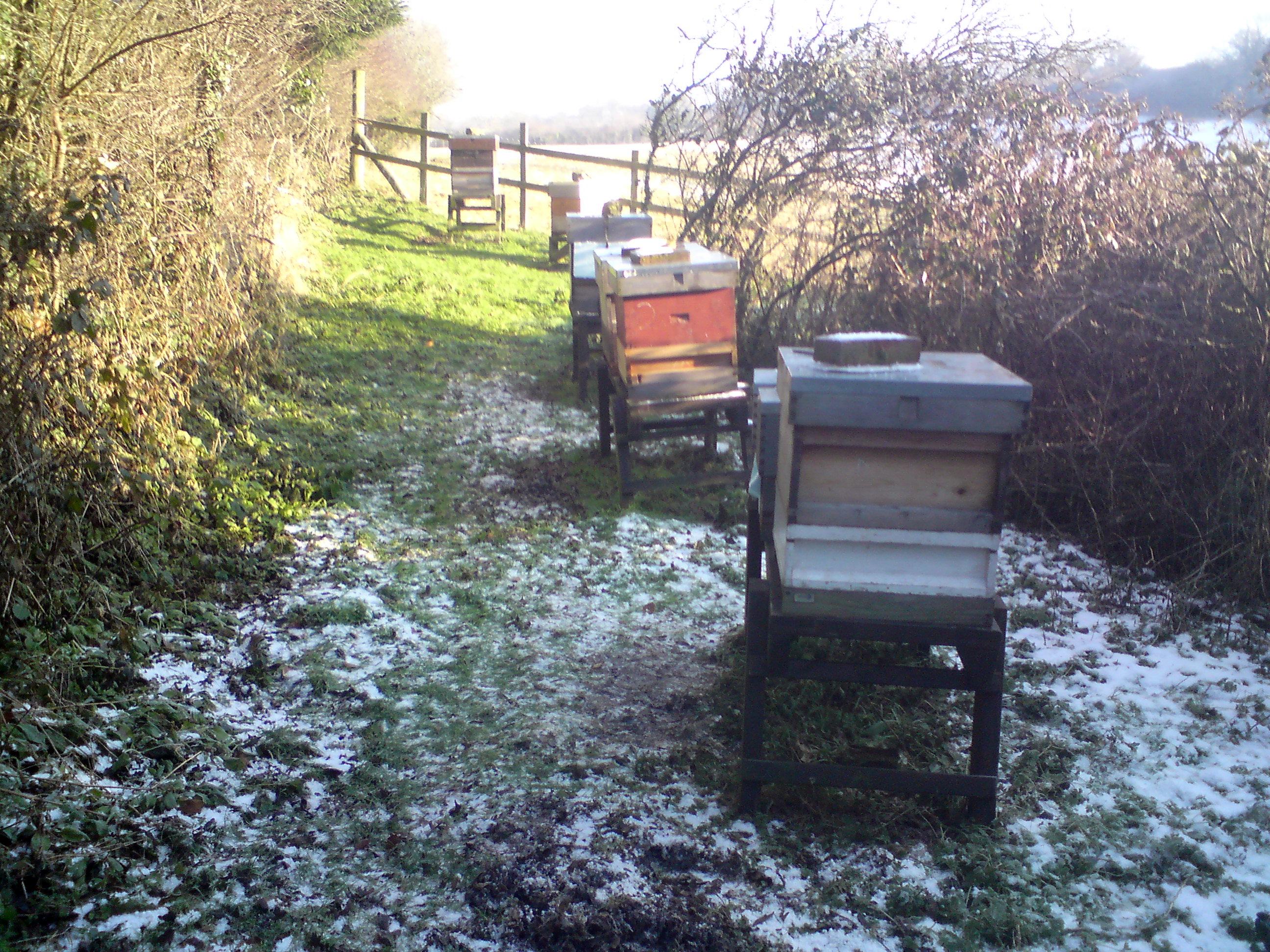
Hi everyone, just a quick note on our European hornet, these are much bigger than a wasp but they do have a striped yellow and black rear, the thorax (or shoulder area) is brown and their head is yellow. I noticed an increase in sightings of the hornet in 2023. This year I am seeing more of them. I asked a pest control officer in our area about his sightings, he also believes numbers have risen. I spilled some bee feed at the entrance to one of my hives, every evening a hornet arrives, licks the landing board and leaves. It shows no interest in the bees nor to enter the hive. The bees do not attack it either, is this an uneasy truce?. Try not to spill feed on or in your hive, take the wax frame scrapings away from your apiary, you do not want to attract wasps I am sure. With the blackberry in flower the honey should start building. Our warm autumn and mild winter means you need to feed more or leave more stores in your hives. Each of my hives had about 30lb of honey, 12l syrup and 2 kg of fondant between September and March the bees ate it all but I did not lose any to starvation.
Peter Kirkup
PBKA Asian Hornet Coordinator
Starvation warning from WBKA!
Dear Beekeepers
June gap -starvation risk
Just to remind all beekeepers, that the June gap has arrived and large growing colonies and nucs etc. with little or no available forage, can quickly suffer from a shortage of stores.
So be sure to check that your bees have enough food, especially if you have taken off any spring honey. Note that if you add extra frames of sealed stores you should keep them in the brood boxes, so as to avoid getting them mixed up in the honey supers. Also, if you have to feed directly, use a light syrup (i.e. 1:1 sugar/water ratio) with any honey supers taken off during the feeding process.
Starvation Warning!!๐
In most areas of the UK our Bee Inspectors carrying out inspections over the last few days are seeing bee colonies which are extremely short of food stores within hives. Sadly, we have also attended apiaries where colonies have already died as a result of starvation.
After such a prolonged wet and cold Spring beekeepers should monitor their colony food levels closely, particularly if apiaries have not been visited for some time. Despite the forecast suggesting that temperatures will increase during this week colonies will still need to be checked for food levels.
Feed can be prepared from refined white sugar and water mixed at a 2:1 ratio or one of the proprietary ready mixed syrups available from beekeeping equipment suppliers.
More information about mixing up sugar can be found in the Best Practice Guidelines found on BeeBase.
If you have any questions then please contact your local Inspector:
https://www.nationalbeeunit.com/contact-us/ National Bee Unit