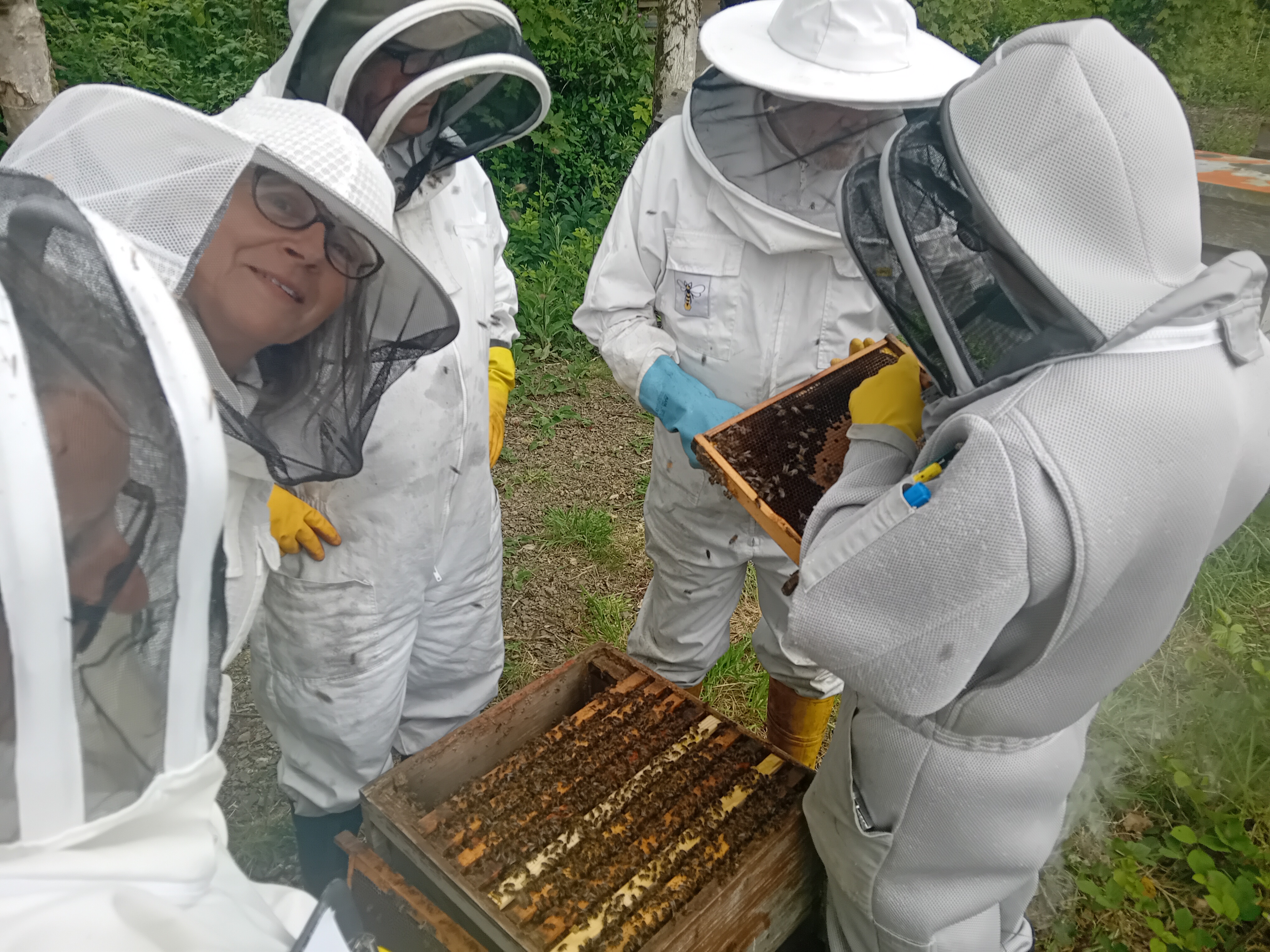
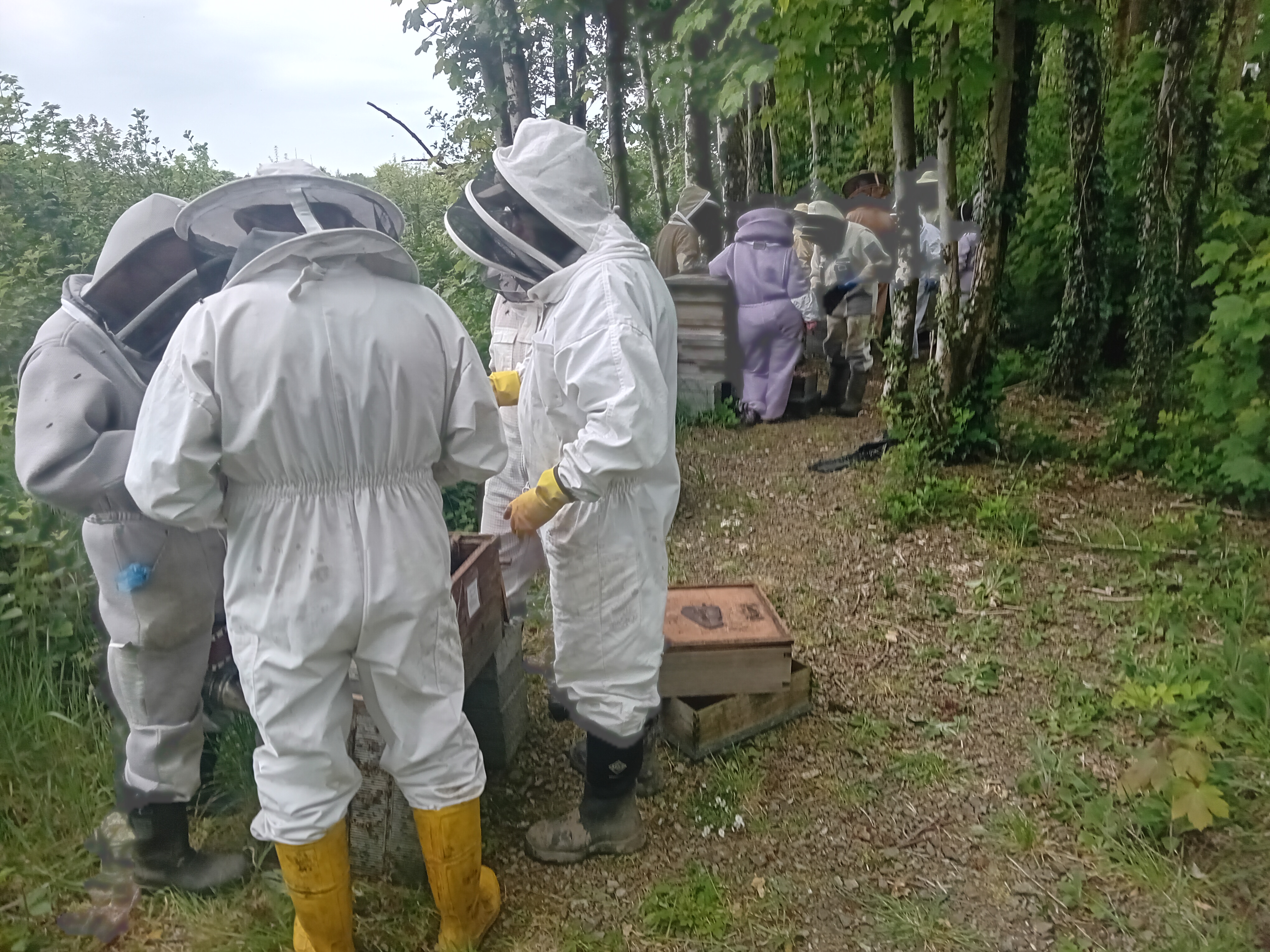
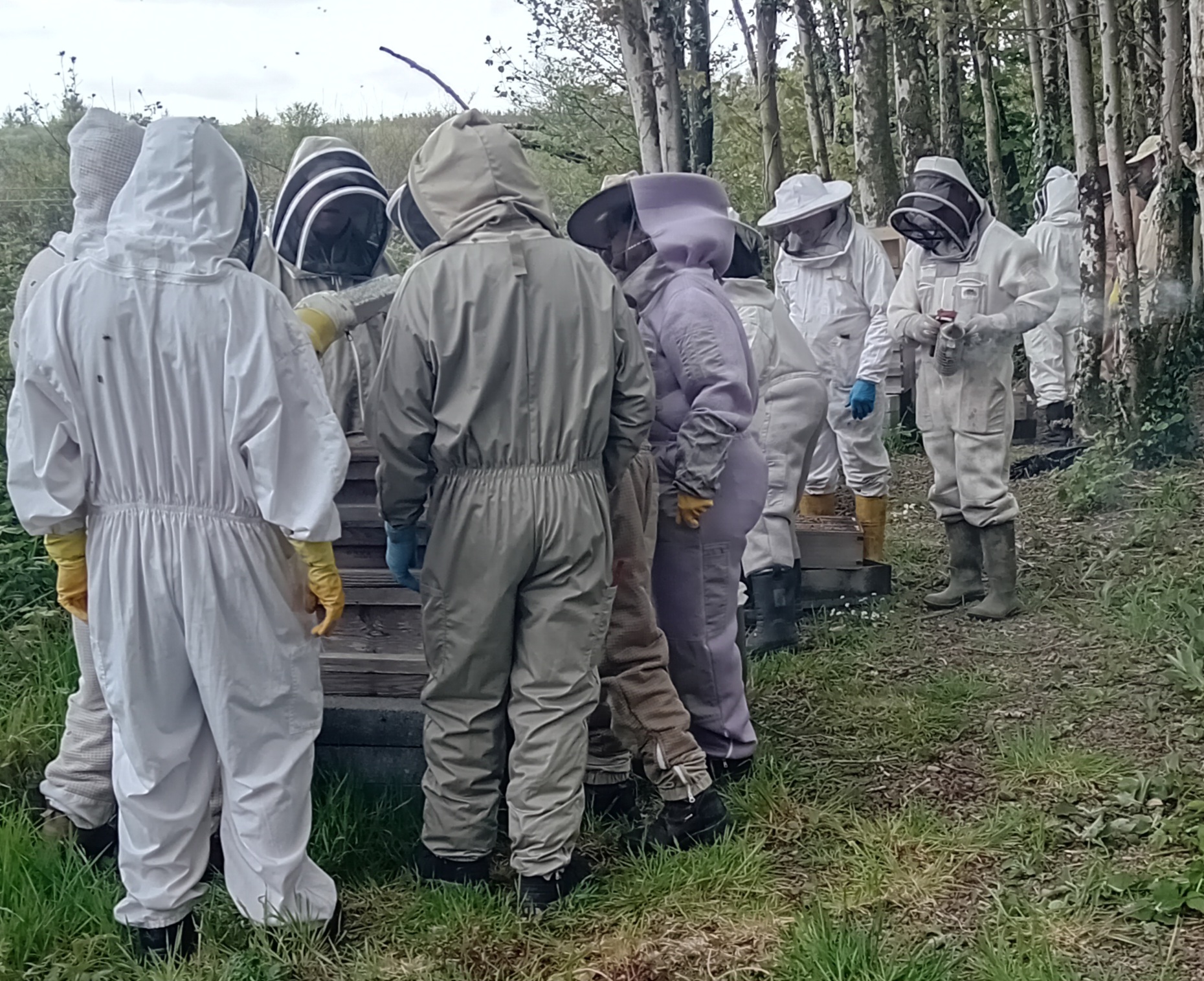
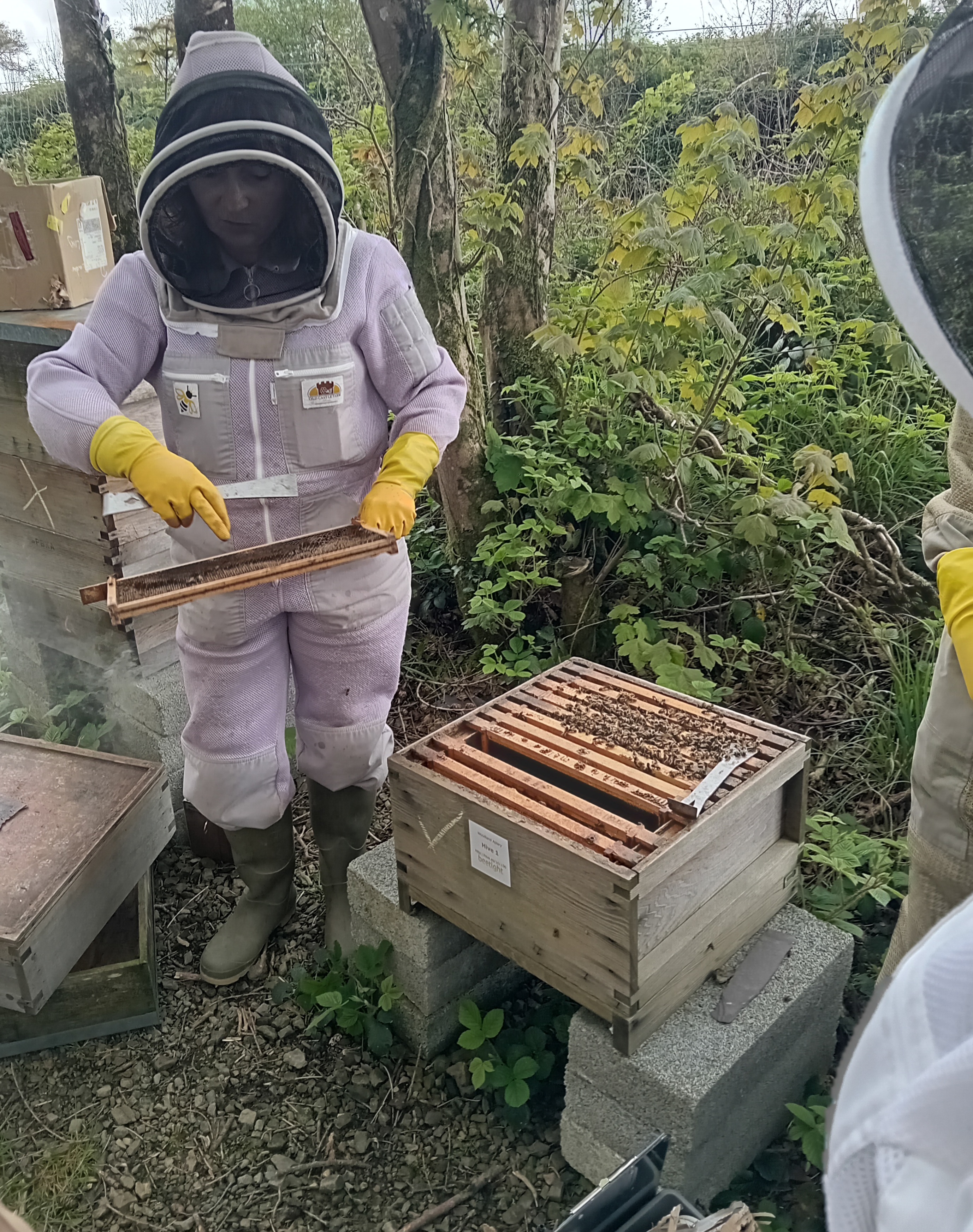
We had an excellent first training session of the season this afternoon, with a mixed turnout of beginners and improvers!
Plenty to look at and lots of questions for the trainers. Many thanks to all who came along, with a special ‘Thank You‘ to the training team who did a magnificent job as always!
See you all at the next meeting on Sunday 11th May. 🐝
Dan grew up with beekeeping around him, earning pocket money by clipping and marking queens. Having spent 15 years working in large companies, he returned to the family beekeeping business in Devon in 2005, and with his father
expanded the business and built a brand new Honey Farm as the centre of their honey production, queen raising, and teaching activities.
The bees can do it, so can you! Aiming to raise perhaps half a dozen queens to use for re-queening or making splits, we look at three very straightforward approaches that require little fiddling or additional equipment: making queenless nucs, the Demaree method, and the Miller method.
Dan grew up with beekeeping around him, earning pocket money by clipping and marking queens. Having spent 15 years working in large companies, he returned to the family beekeeping business in Devon in 2005, and with his father expanded the business and built a brand new Honey Farm as the centre of their honey production, queen raising, and teaching activities.
Dan holds the National Diploma in Beekeeping (NDB), is a BBKA Master Beekeeper, and is an examiner for the BBKA and NDB examinations. He is a regular lecturer around the UK on practical beekeeping topics. Daniel wrote some of the BBKA’s Course in a Case training courses, has contributed to the BBKA’s Liquid Gold and Swarming videos, and co-authored the BBKA’s Healthy Hive Guide book. He has just published Using Apideas, a manual for queen mating nucs.
He is a member of the Bee Farmers Association, and has been a Trustee and Chairman of the International Bee Research Association (IBRA), and Chairman of the NDB Examination Board.
After registering, you will receive a confirmation email containing information about joining the webinar.
Honey Bees can swarm at any time from roughly mid-April to August. A swarm of bees can be a daunting sight, but swarming bees rarely sting: their objective is to find a new home as soon as possible.
PLEASE NOTE:
Ensure that what you have found are Honey Bees and NOT Bumble Bees or Wasps, etc. before contacting us, by using the following guide:
1. Wasps
Wasps do not swarm. Each year a new nest is built which looks like a paper lantern. Close to it is easy to distinguish between wasps which are brighter yellow and with a narrower waist than the honey bee. If insects are flying from a gap in roof tiles near the ridge, it can be tricky. If the nest is visible identification is easy. Please note that WE WILL NOT deal with Wasps or their nests – if a Pembrokeshire resident, call Pembrokeshire County Council’s Customer Contact Centre on 01437 764551 and ask for Pest Control.
Bumblebees do not swarm. Most people can recognise bumblebees they are much bigger and fewer than honey bees with layer of hairs on their bodies which is usually banded black and yellow (or orange or red) and the traffic at the nest entrance will consist of only a few bees a minute, whereas a busy hive will have almost a cloud of bees at the entrance. If you have bees in your bird box, they are probably the Tree Bumblebee (Bombus Hypnorum), which have come over from the continent in recent years. They aren’t particularly aggressive, but are likely to defend their nest if they feel threatened. WE WILL BE UNABLE to help you with a Bumble Bee problem. The bees will disappear over the season and are unlikely to return to the same location, so if possible leave them alone and enjoy them for the summer.
Solitary Bees do not swarm. Since these bees are quite fussy about where they set up their nests, it is not uncommon for many bees to do so in close proximity, and if the conditions are right a large number of nests can mature almost at the same time. In this case a large number of bees will be seen crawling about. One of the most common is the red mason bee, which can often be seen exploiting holes in brickwork or footpaths for its nesting site. WE WILL BE UNABLE to help you with Solitary Bees, so if possible, enjoy them for the summer.
Honey Bees are about the same size as a wasp but are duller in colour – if you see a large cluster of thousands of insects hanging on a branch or fence post (see photo above) this may be a swarm of Honey Bees.
We DO NOT recover bees from buildings, chimneys, etc for health and safety reasons and because of the potential structural damage that could be caused.
We WILL NOT destroy Honey Bee nests – this is a pest control problem. Honey Bees are not protected, so do not be put off if you are told this.
If you are a Pembrokeshire resident, call Pembrokeshire County Council’s, Customer Contact Centre on 01437 764551 and ask forPest Control. (Alternatively contact a professional Pest Removal company.)
Only if you have excluded all the above and need advice about Honey Bees, please contact:
PBKA Swarm Coordinator – Kenny Davies on 07968 360297