Bee treatments and the recording of veterinary medicines 

Beekeepers should regularly check their bees for signs of disease and infestations.
Now is a good time to check and treat for Varroa, before Winter feeding commences. There are numerous permitted treatments available and you are required to keep records of treatment given.
See below the advice given by the National Bee Unit (NBU).

Record of Veterinary Medicines 

You must keep records of all veterinary medicines administered to colonies for at least five years, irrespective if the colony concerned is no longer in your possession or has died during that period.

The ‘veterinary medicine administration record’, is a useful template for you to use to meet these requirements.
Your medicines records can be requested at any time by the relevant authority and/or bee inspector. Failing to keep records of veterinary medicines applied to honey bee colonies, as set out in the Veterinary Medicines Regulations (VMR) 2013, is an offence.

NBU Fact Sheets

Please find attached links to the recently updated NBU factsheets that you may be interested in distributing in your newsletters etc to your members.

Small Hive beetle advisory leaflet: This leaflet details the biology and impact of the invasive small hive beetle and provides guidance on how to identify and monitor for the presence of the beetle in colonies, what to do if you suspect its presence, and it also describes the NBU’s surveillance programme and how we work to prevent this invasive pest from entering the UK. It has a section dedicated to explaining the legislation regarding imports and includes links to the relevant documentation for individuals wishing to import bees.  The leaflet has a practical step-by-step method for performing a hive check for SHB.

English: https://www.nationalbeeunit.com/assets/PDFs/3_Resources_for_beekeepers/Advisory_leaflets/Starting_Right_with_Bees_Final_2016.pdf

Welsh: https://www.nationalbeeunit.com/assets/PDFs/3_Resources_for_beekeepers/Advisory_leaflets/Starting_Right_-Bees_Final-Web-version-Welsh.pdf

Starting Right with Bees advisory leaflet: This leaflet describes the basics of beekeeping for new beekeepers or for those who are considering beekeeping as a hobby. It explains the basic biology and management of honey bee colonies and provides plenty of links to our content that is especially relevant to those new to beekeeping. The messaging in this booklet urges beekeepers: to join their local associations, to source bees locally, to consider hygiene both when purchasing bees and when performing inspections, to learn more about pests and diseases, particularly foulbrood, and Varroa.  Also included is a section outlining the legal responsibilities of beekeepers and a step-by-step guide to performing a simple hive inspection. I hope this updated leaflet will be particularly useful for you to share with new and less experienced beekeepers.

English: https://www.nationalbeeunit.com/assets/PDFs/3_Resources_for_beekeepers/Advisory_leaflets/Starting_Right_with_Bees_Final_2016.pdf

Welsh: https://www.nationalbeeunit.com/assets/PDFs/3_Resources_for_beekeepers/Advisory_leaflets/Small_hive_beetle_Web_Welsh.pdf

There are 3 fact sheets newly updated on BeeBase

Wax moth: This fact sheet has been significantly reworked to provide more information on the damage that wax moth can potentially cause and more detail on the prevention of wax moth and treatment of infested frames.

English: https://www.nationalbeeunit.com/assets/PDFs/3_Resources_for_beekeepers/Fact_Sheets/Fact_30_Wax_Moth.pdf

Welsh: https://www.nationalbeeunit.com/assets/PDFs/3_Resources_for_beekeepers/Fact_Sheets/Fact_30_Wax_Moth_cymraeg.pdf

Fumigating comb: Our fact sheet providing a step-by-step guide to acetic acid fumigation of frames has been updated to include more information into the hazards of using this method to treat frames and mitigations that need to be observed to prevent damage to yourself or equipment.

English: https://www.nationalbeeunit.com/assets/PDFs/3_Resources_for_beekeepers/Fact_Sheets/Fact_14_Fumigating_Comb.pdf

Welsh: https://www.nationalbeeunit.com/assets/PDFs/3_Resources_for_beekeepers/Fact_Sheets/Fact_14_Fumigating_comb_Welsh.pdf

Small hive beetle: This fact sheet now focusses on how to identify SHB, what to do if you think you suspect SHB, surveillance and the importance of observing import regulations. The key messages are know what it looks like & how to report it and observe import regulations.

English: https://www.nationalbeeunit.com/assets/PDFs/3_Resources_for_beekeepers/Fact_Sheets/Fact_12_Small_Hive_Beetle.pdf

Welsh: https://www.nationalbeeunit.com/assets/PDFs/3_Resources_for_beekeepers/Fact_Sheets/FACT_12_Control_of_Small_Hive_Beetle_cymraeg.pdf

I do hope you find these useful and are able to forward them on in monthly emails/newsletters.

Kind Regards

Dan

Daniel Baxter

Regional Bee Inspector – Wales | Arolygydd Gwenyn Rhanbarthol – Cymru

National Bee Unit | Uned Gwenyn Cenedlaethol – Animal and Plant Health Agency (APHA) | Asiantaeth Iechyd Anifeiliaid a Phlanhigion

Mobile: 07771038646    Email: daniel.baxter@apha.gov.uk

National Bee Unit Website (BeeBase)/ Gwefan: www.nationalbeeunit.com

Follow us on / Dilynwch ni ar

Twitter/ Trydar: @NBU_APHA | Facebook/Gweplyfr: @APHANationalBeeUnit

Instagram: @NationalBeeUnit_APHA | YouTube:  National Bee Unit – Animal and Plant Health

Address/ Cyferiad: National Bee Unit, APHA, Room, 11G03, York Bioteh Campus, Sand Hutton, York, YO41 1LZ

Department for Environment, Food and Rural Affairs (Defra) This email and any attachments is intended for the named recipient only. If you have received it in error you have no authority to use, disclose, store or copy any of its contents and you should destroy it and inform the sender. Whilst this email and associated attachments will have been checked for known viruses whilst within Defra systems we can accept no responsibility once it has left our systems. Communications on Defra’s computer systems may be monitored and/or recorded to secure the effective operation of the system and for other lawful purposes.
Message from the Regional Bee Inspector for Wales

Dear Beekeeper and association member,
We all know that this season has been a particularly busy one for swarms – it certainly has been in the area I live in south Wales and across the board from the reports I get.
Please can I ask those of you who are swarm collectors to make yourselves aware of the areas in the county and adjacent counties where you may be collecting swarms from where bee disease is present and to ensure that where you collect swarms in those areas they are hived solely onto new fresh foundation to reduce the risk of disease transmission through the storage of honey they bring with them, into drawn combs.
 If you are in a disease area and you put out ‘bait hives’ same thing again – please do not put out boxes with old combs or drawn combs in them as you are substantially increasing your risk of picking up foulbrood from incoming swarms.
Foundation should be used with some form of commercially available attractant and, if the bait hive is big enough the bees will occupy it, sometimes they will occupy a box with foundation without an attractant.
You can check the locations of outbreaks of foulbrood here which is freely available information on BeeBase :
 
Please remember when you view the above pages to look at both 2025 and previous years to see the area’s most at risk – the 2024 areas are just as important from a swarm point of view as 2025, we are early in the season and many of those areas identified in 2024 wont yet have received follow-up visits yet.
Where possible try to isolate incoming swarms you have hived in a separate isolation apiary and wait for two brood cycles, examining the brood closely and if you have any concerns please contact your local bee inspector who can be contacted by searching on your postcode on
your postcode on beebase: Contact Us » APHA – National Bee Unit – BeeBase if you are unsure as to what the National Bee Unit does this short film is quite useful from Beebase: About Us » APHA – National Bee Unit – BeeBase
Please try to log into your Beebase account and make sure that your apiary locations are up to date if they change – if they are up to date and we find any Statutory Notifiable Disease in your area you will be informed soonest. Having your email address on file means the notifications will come to you swiftly.
Bee Inspectors are all practicing – established Beekeepers and Beefarmers – we are here to help and there is no such thing as a daft question.
For those of you who are located within South Wales you may well have had a visit from me in the past and myself and the team of inspectors across Wales are currently booking up to see people in the radius surrounding where the latest outbreaks of European Foulbrood and American foulbrood has been discovered.
Our work is always done protecting the confidentiality of apiary site locations and beekeepers.
Many thanks again and happy beekeeping.
Kind regards.
Dan
Daniel Baxter
Regional Bee Inspector – Wales | Arolygydd Gwenyn Rhanbarthol – Cymru
National Bee Unit | Uned Gwenyn Cenedlaethol – Animal and Plant Health Agency (APHA) | Asiantaeth Iechyd Anifeiliaid a Phlanhigion
Mobile: 07771038646    Email: daniel.baxter@apha.gov.uk
National Bee Unit Website (BeeBase)/ Gwefan: www.nationalbeeunit.com
Follow us on / Dilynwch ni ar
Twitter/ Trydar: @NBU_APHA | Facebook/Gweplyfr: @APHANationalBeeUnit

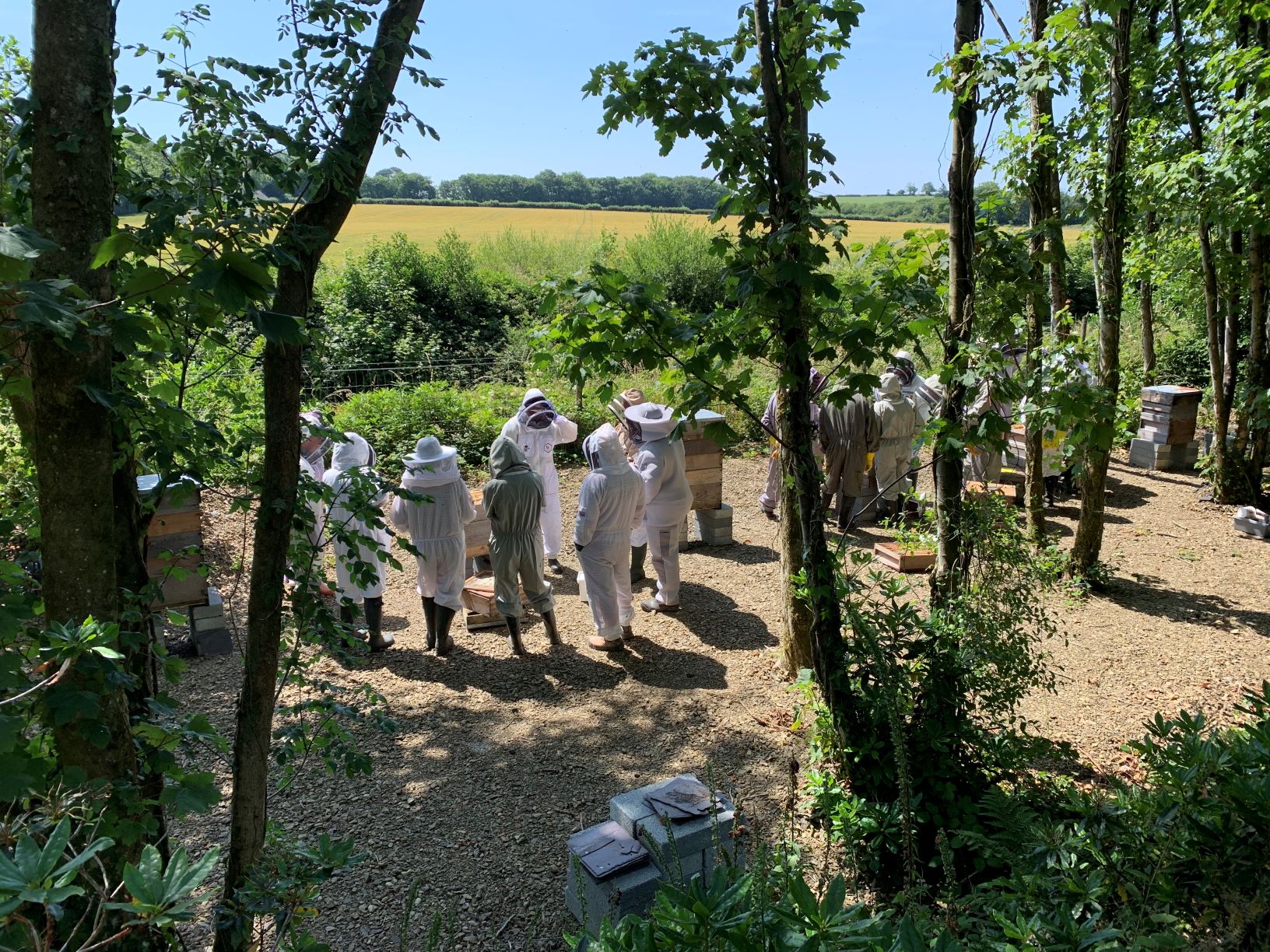
Bee Health/Safari Day feedback

Would all PBKA members who attended the Bee Health/Safari on Saturday 16th July, please fill in a feedback form – they only take a couple of minutes and it will help the National Bee Unit to justify more events like this in the future. Here is the link to the form.

Also the NBU has just (this week) made ‘live’, a video animation demonstrating the work of the NBU and encouraging people to register on BeeBase – click here

Note that all beekeepers have a duty to keep healthy, disease free bees and the PBKA strongly recommends that all beekeepers sign up to Beebase in order to ensure that they receive any warnings and can obtain advice etc. in the event of a disease outbreak.

We would like to express our sincere thanks to the National Bee Unit and their team, for a very interesting and most enjoyable course. 🐝