Bee Health
Asian Hornet Update by Peter Kirkup, PBKA Asian Hornet Coordinator
I attended a very interesting presentation about the Asian Hornet problems in Jersey. There were many useful points learned from the talk. Here are the main points. The queens are just appearing now, they are hungry. They will be about until May. You might find a primary nest anywhere. It will be about the size of a tennis ball to the size of a melon, the entrance will be on the bottom. Later in the year the nests can be as much as a metre and are now secondary nests and can be in the floor in low bushes in the tops of trees in buildings etc.
You need to keep away from the nests, your bee suit WILL NOT be enough protection, the stings are much worse than wasps and bees. Take a photo, video, Google my maps tracking your route to the nest, what 3 words address.
If you think you have seen an Asian hornet, contact me, Peter Kirkup, Asian Hornet Coordinator on 07770 883720, or the NBU Bee Inspectors, or the PBKA.
You don’t want to be putting traps out that kill as other pollinators perish and a dead Hornet cannot lead you to the nest. 1 dead Hornet is only 1 dead Hornet, the nest might contain 3000 insects.. Please look at photos and watch video of Asian and European hornets to become more accurate at identifying what you see. If it has a full yellow abdomen it is not the Asian Hornet this only has one yellow band near the end of its body. Public awareness seems to be the only way we can hope to maintain a level of control over the range of these apex predators, they eat almost everything and adapt very successfully to their environment.
A nest has been found in Scotland and The North of England, Ireland is under serious threat from hornets hitching a ride on the ferries from Northern France and Spain. The prevailing wind could easily assist the insects finding their way to Wales.
Please be careful gardening, in Jersey many of the Hornet attacks occurred from gardening activities.
Be safe, report it.
Asian Hornet Webinar this Wednesday at 7.30pm
Webinar On Wednesday
There’s still a little time left to register for our next webinar, this Wednesday night (5th March) on the subject of Yellow-legged (Asian) hornets.
Join us online from 7.30pm for an evening with John De Carteret, when he’ll give us an introduction to the Jersey Asian Hornet Group, and we’ll discover more about the work they have done, and are doing, to combat Yellow-legged (Asian) hornets in Jersey.
To book your free place please click here
To find out more about their work please visit
Starvation risk warning!
Just to advise beekeepers everywhere to check their bees for stores (especially nucs), particularly if you didn’t give yours a full winter feed at the end of last season.
So give your hives a heft and if needed, give them some fondant or candy (not liquid feed!) and recheck regularly!
This is also a good time to treat for Varroa while brood numbers are low.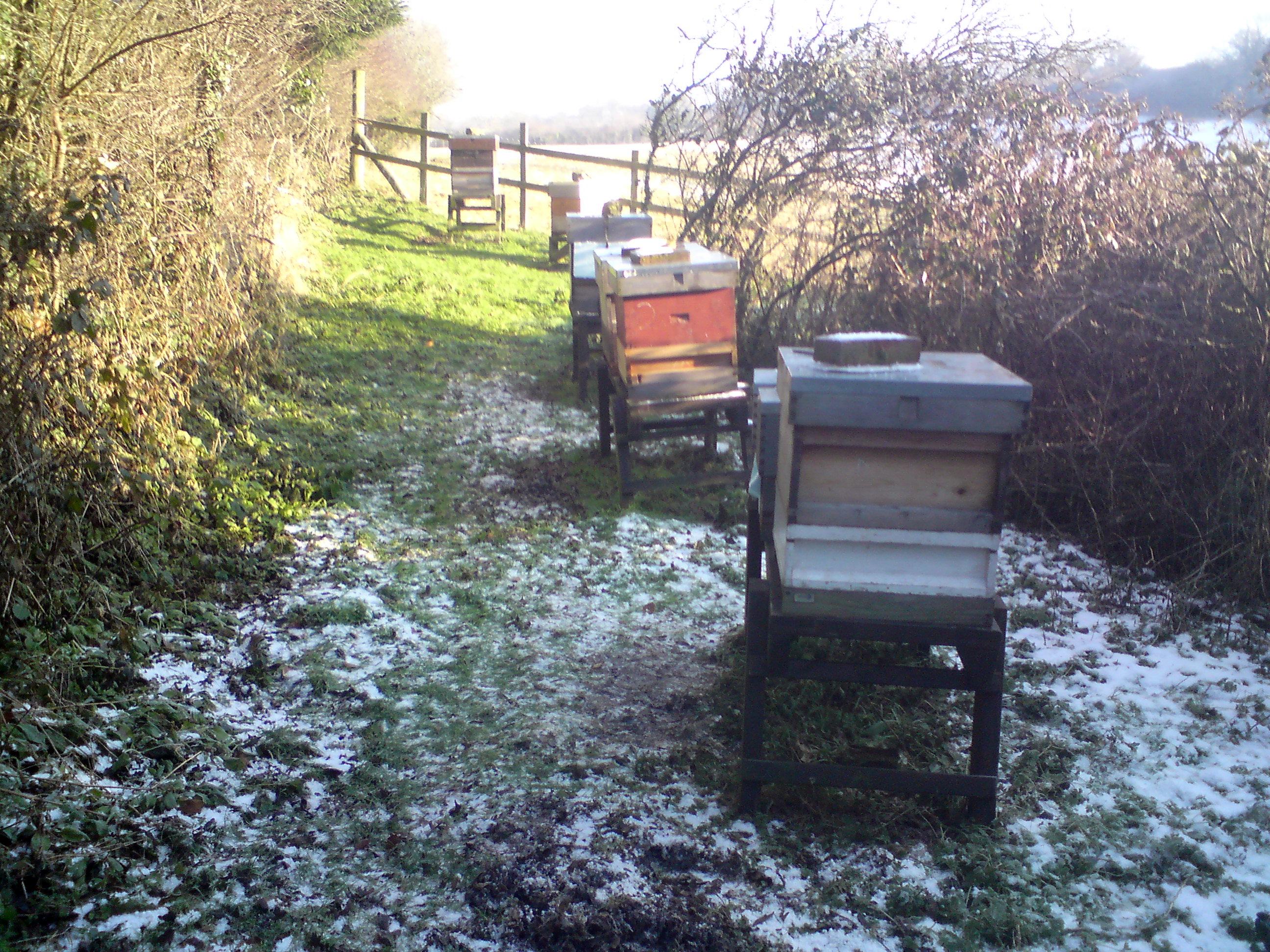
Bee-harming pesticides found in English waterways
Pesticides that harm bees were found in the “majority” of English waterways tested in the last year, according to data analysis by two environmental charities.
The Rivers Trust and Wildlife and Countryside Link found neonicotinoid pesticides were present in 85% of English rivers tested by the Environment Agency between 2023 and 2024.
See link for further details!
 Pembrokeshire Beekeepers' Association