Reminder – Webinar – Integrated Pest Control for Varroa Management – Thursday 27th July at 7.30pm


IPM for varroa and the complexities of successful treatment free beekeeping – Maggie Gill NBU

Thu, Jul 27, 2023 7:30 PM – 9:00 PM BST

IPM for varroa and the complexities of successful treatment free beekeeping – Maggie Gill NBU

Join us for a webinar on Jul 27, 2023 at 7:30 PM BST.

Register now!

Maggie is the Regional Bee Inspector for Wales and her talk will look at integrated pest management for varroa and the complexities of ‘treatment free’ beekeeping.
Maggie has worked for the National Bee Unit since 2014 working as a Seasonal Bee Inspector prior to taking up her current role. She has kept bees since 2007 and has an interest in honey bee research. This interest has led her to work with the National Botanic Garden of Wales to look at how nectar resources affect pollinator assemblages, and to carry out research for the NBU in Thailand looking into monitoring for Tropilaelaps and potential transmission routes. Maggie is also currently working with the US military and University of Maryland on monitoring volatile organic compounds in colonies to detect sub clinical levels of disease and environmental contamination.
Many beekeepers are interested in becoming treatment free and Maggie’s talk will help us to understand what is required for this to be achieved successfully.

After registering, you will receive a confirmation email containing information about joining the webinar.

View System Requirements

Webinar – Integrated Pest Control for Varroa Management


IPM for varroa and the complexities of successful treatment free beekeeping – Maggie Gill NBU

Thu, Jul 27, 2023 7:30 PM – 9:00 PM BST

IPM for varroa and the complexities of successful treatment free beekeeping – Maggie Gill NBU

Join us for a webinar on Jul 27, 2023 at 7:30 PM BST.

Register now!

Maggie is the Regional Bee Inspector for Wales and her talk will look at integrated pest management for varroa and the complexities of ‘treatment free’ beekeeping.
Maggie has worked for the National Bee Unit since 2014 working as a Seasonal Bee Inspector prior to taking up her current role. She has kept bees since 2007 and has an interest in honey bee research. This interest has led her to work with the National Botanic Garden of Wales to look at how nectar resources affect pollinator assemblages, and to carry out research for the NBU in Thailand looking into monitoring for Tropilaelaps and potential transmission routes. Maggie is also currently working with the US military and University of Maryland on monitoring volatile organic compounds in colonies to detect sub clinical levels of disease and environmental contamination.
Many beekeepers are interested in becoming treatment free and Maggie’s talk will help us to understand what is required for this to be achieved successfully.

After registering, you will receive a confirmation email containing information about joining the webinar.

View System Requirements

Joining Beebase

Just a reminder that beekeepers have a duty to keep healthy, disease free bees and the PBKA strongly recommends that all beekeepers sign up to Beebase in order to ensure that they receive any warnings and can obtain advice etc. in the event of a disease outbreak.

Also the NBU has made ‘live’, a video animation demonstrating the work of the NBU and encouraging people to register on BeeBase – click here

Bee Health/Safari Day feedback

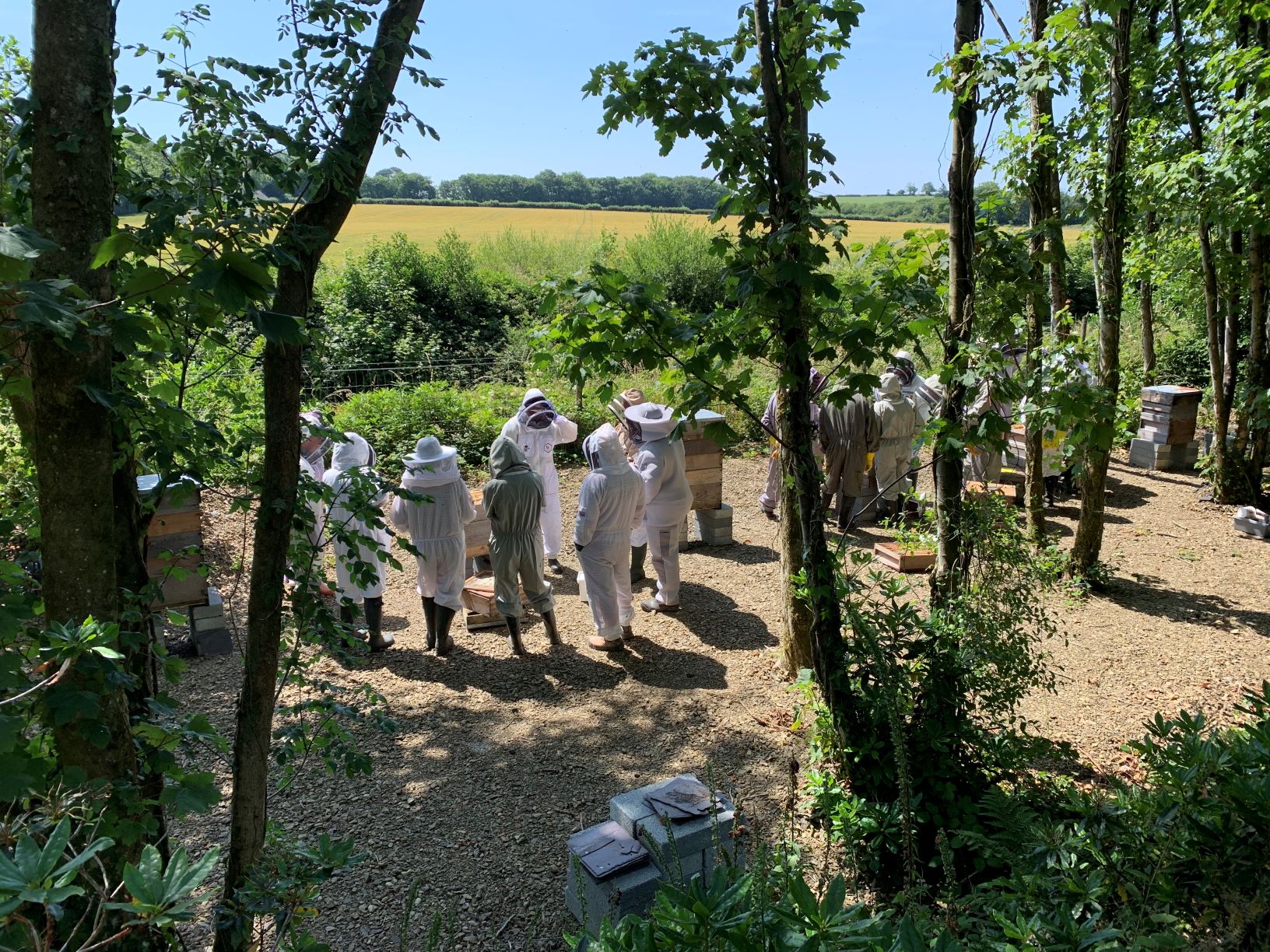
Would all PBKA members who attended the Bee Health/Safari on Saturday 16th July, please fill in a feedback form – they only take a couple of minutes and it will help the National Bee Unit to justify more events like this in the future. Here is the link to the form.

Also the NBU has just (this week) made ‘live’, a video animation demonstrating the work of the NBU and encouraging people to register on BeeBase – click here

Note that all beekeepers have a duty to keep healthy, disease free bees and the PBKA strongly recommends that all beekeepers sign up to Beebase in order to ensure that they receive any warnings and can obtain advice etc. in the event of a disease outbreak.

We would like to express our sincere thanks to the National Bee Unit and their team, for a very interesting and most enjoyable course. 🐝