NBU Fact Sheets

Please find attached links to the recently updated NBU factsheets that you may be interested in distributing in your newsletters etc to your members.

Small Hive beetle advisory leaflet: This leaflet details the biology and impact of the invasive small hive beetle and provides guidance on how to identify and monitor for the presence of the beetle in colonies, what to do if you suspect its presence, and it also describes the NBU’s surveillance programme and how we work to prevent this invasive pest from entering the UK. It has a section dedicated to explaining the legislation regarding imports and includes links to the relevant documentation for individuals wishing to import bees.  The leaflet has a practical step-by-step method for performing a hive check for SHB.

English: https://www.nationalbeeunit.com/assets/PDFs/3_Resources_for_beekeepers/Advisory_leaflets/Starting_Right_with_Bees_Final_2016.pdf

Welsh: https://www.nationalbeeunit.com/assets/PDFs/3_Resources_for_beekeepers/Advisory_leaflets/Starting_Right_-Bees_Final-Web-version-Welsh.pdf

Starting Right with Bees advisory leaflet: This leaflet describes the basics of beekeeping for new beekeepers or for those who are considering beekeeping as a hobby. It explains the basic biology and management of honey bee colonies and provides plenty of links to our content that is especially relevant to those new to beekeeping. The messaging in this booklet urges beekeepers: to join their local associations, to source bees locally, to consider hygiene both when purchasing bees and when performing inspections, to learn more about pests and diseases, particularly foulbrood, and Varroa.  Also included is a section outlining the legal responsibilities of beekeepers and a step-by-step guide to performing a simple hive inspection. I hope this updated leaflet will be particularly useful for you to share with new and less experienced beekeepers.

English: https://www.nationalbeeunit.com/assets/PDFs/3_Resources_for_beekeepers/Advisory_leaflets/Starting_Right_with_Bees_Final_2016.pdf

Welsh: https://www.nationalbeeunit.com/assets/PDFs/3_Resources_for_beekeepers/Advisory_leaflets/Small_hive_beetle_Web_Welsh.pdf

There are 3 fact sheets newly updated on BeeBase

Wax moth: This fact sheet has been significantly reworked to provide more information on the damage that wax moth can potentially cause and more detail on the prevention of wax moth and treatment of infested frames.

English: https://www.nationalbeeunit.com/assets/PDFs/3_Resources_for_beekeepers/Fact_Sheets/Fact_30_Wax_Moth.pdf

Welsh: https://www.nationalbeeunit.com/assets/PDFs/3_Resources_for_beekeepers/Fact_Sheets/Fact_30_Wax_Moth_cymraeg.pdf

Fumigating comb: Our fact sheet providing a step-by-step guide to acetic acid fumigation of frames has been updated to include more information into the hazards of using this method to treat frames and mitigations that need to be observed to prevent damage to yourself or equipment.

English: https://www.nationalbeeunit.com/assets/PDFs/3_Resources_for_beekeepers/Fact_Sheets/Fact_14_Fumigating_Comb.pdf

Welsh: https://www.nationalbeeunit.com/assets/PDFs/3_Resources_for_beekeepers/Fact_Sheets/Fact_14_Fumigating_comb_Welsh.pdf

Small hive beetle: This fact sheet now focusses on how to identify SHB, what to do if you think you suspect SHB, surveillance and the importance of observing import regulations. The key messages are know what it looks like & how to report it and observe import regulations.

English: https://www.nationalbeeunit.com/assets/PDFs/3_Resources_for_beekeepers/Fact_Sheets/Fact_12_Small_Hive_Beetle.pdf

Welsh: https://www.nationalbeeunit.com/assets/PDFs/3_Resources_for_beekeepers/Fact_Sheets/FACT_12_Control_of_Small_Hive_Beetle_cymraeg.pdf

I do hope you find these useful and are able to forward them on in monthly emails/newsletters.

Kind Regards

Dan

Daniel Baxter

Regional Bee Inspector – Wales | Arolygydd Gwenyn Rhanbarthol – Cymru

National Bee Unit | Uned Gwenyn Cenedlaethol – Animal and Plant Health Agency (APHA) | Asiantaeth Iechyd Anifeiliaid a Phlanhigion

Mobile: 07771038646    Email: daniel.baxter@apha.gov.uk

National Bee Unit Website (BeeBase)/ Gwefan: www.nationalbeeunit.com

Follow us on / Dilynwch ni ar

Twitter/ Trydar: @NBU_APHA | Facebook/Gweplyfr: @APHANationalBeeUnit

Instagram: @NationalBeeUnit_APHA | YouTube:  National Bee Unit – Animal and Plant Health

Address/ Cyferiad: National Bee Unit, APHA, Room, 11G03, York Bioteh Campus, Sand Hutton, York, YO41 1LZ

Department for Environment, Food and Rural Affairs (Defra) This email and any attachments is intended for the named recipient only. If you have received it in error you have no authority to use, disclose, store or copy any of its contents and you should destroy it and inform the sender. Whilst this email and associated attachments will have been checked for known viruses whilst within Defra systems we can accept no responsibility once it has left our systems. Communications on Defra’s computer systems may be monitored and/or recorded to secure the effective operation of the system and for other lawful purposes.
Bee-harming pesticides found in English waterways

Pesticides that harm bees were found in the “majority” of English waterways tested in the last year, according to data analysis by two environmental charities.

The Rivers Trust and Wildlife and Countryside Link found neonicotinoid pesticides were present in 85% of English rivers tested by the Environment Agency between 2023 and 2024.

See link for further details!


Neonicotinoids given approval for use!

The UK government has given emergency approval for the use of a pesticide banned because of the harm it can cause bees, for the fourth year in a row.

Permission to use the neonicotinoid on sugar beet seeds has been needed despite a vow by the industry to find an alternative by the end of 2023.

The Wildlife Trusts said the decision was a “deathblow” for wildlife.

See BBC report for further details!


Bee Health/Safari Day feedback

Would all PBKA members who attended the Bee Health/Safari on Saturday 16th July, please fill in a feedback form – they only take a couple of minutes and it will help the National Bee Unit to justify more events like this in the future. Here is the link to the form.

Also the NBU has just (this week) made ‘live’, a video animation demonstrating the work of the NBU and encouraging people to register on BeeBase – click here

Note that all beekeepers have a duty to keep healthy, disease free bees and the PBKA strongly recommends that all beekeepers sign up to Beebase in order to ensure that they receive any warnings and can obtain advice etc. in the event of a disease outbreak.

We would like to express our sincere thanks to the National Bee Unit and their team, for a very interesting and most enjoyable course. 🐝

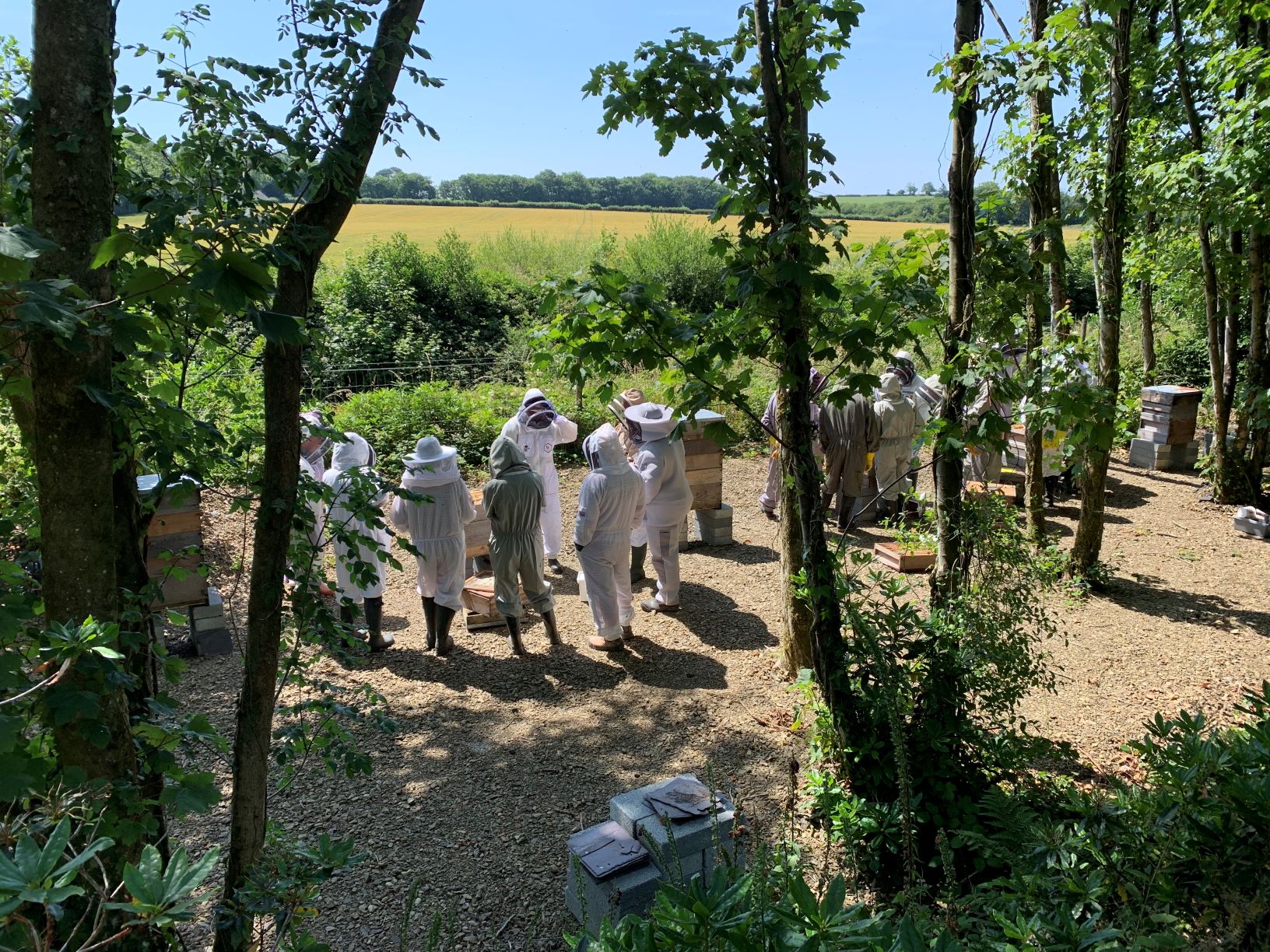
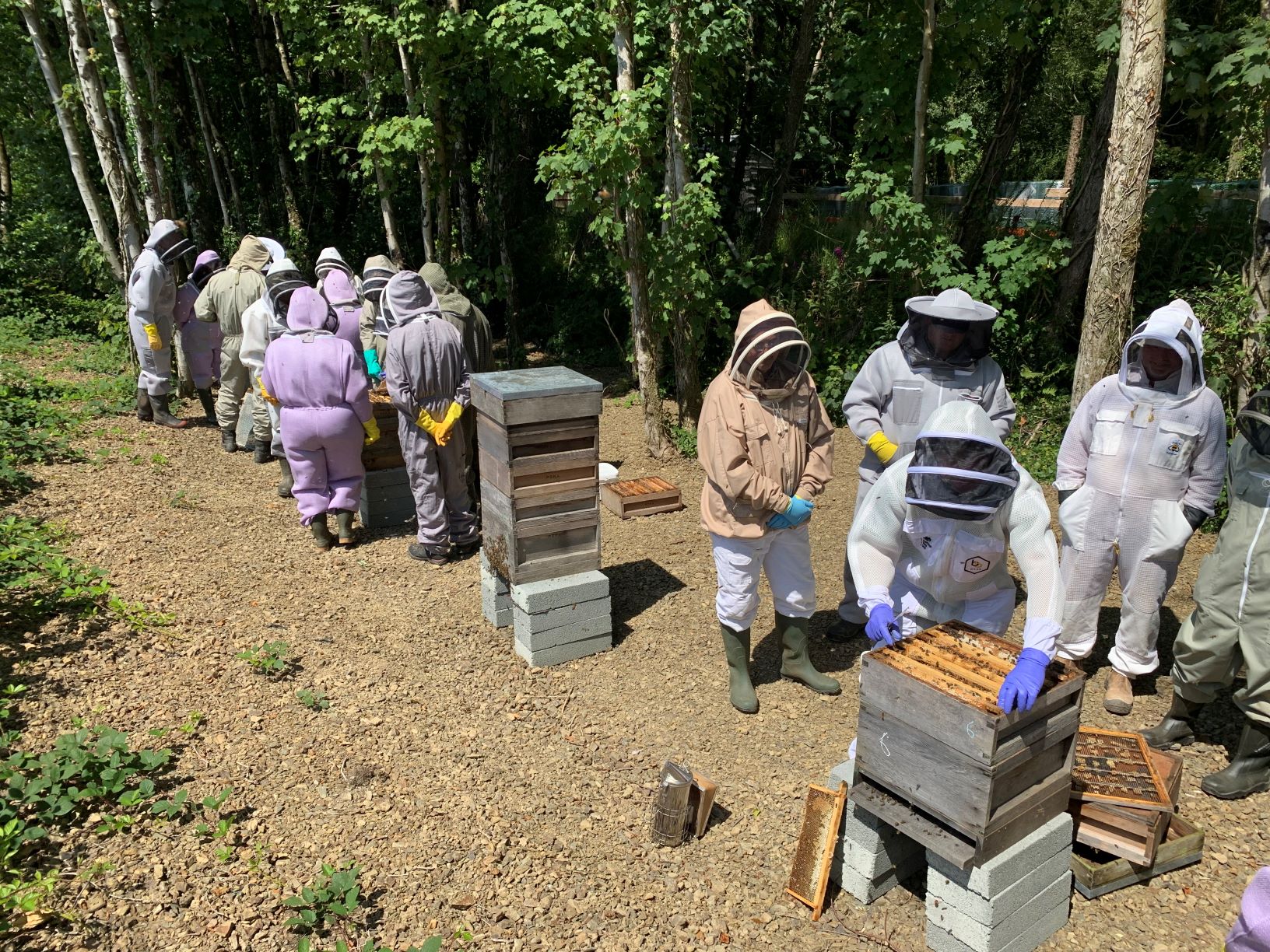
Successful Pembrokeshire Bee Health Day/Bee Safari held on Saturday 16th July

We would like to extend our grateful thanks to the Bee Inspectors from the National Bee Unit, who presented an excellent ‘Bee Health Safari’ for Pembrokeshire Beekeepers’ Association, at Scolton Manor, on Saturday 16th July.

The ‘Bee Health Safari’ included the Bee Inspectors giving practical demonstrations to attendees on how to perform a health inspection and spot any possible problems using colonies of bees at the association’s training apiary.

The inspectors were also on hand to offer expert advice, presenting information and displays on exotic pests and general bee health.

Many thanks also to the PBKA members who came along demonstrating such enthusiasm and a willingness to learn, with a barrage of questions….many of whom also turned up at the honey extracting demonstration the following day…….

Now that’s what we call dedication!!