Stories of Interest
Bee treatments and the recording of veterinary medicines
Beekeepers should regularly check their bees for signs of disease and infestations.
Now is a good time to check and treat for Varroa, before Winter feeding commences. There are numerous permitted treatments available and you are required to keep records of treatment given.
See below the advice given by the National Bee Unit (NBU).
Record of Veterinary Medicines
You must keep records of all veterinary medicines administered to colonies for at least five years, irrespective if the colony concerned is no longer in your possession or has died during that period.
The ‘veterinary medicine administration record’, is a useful template for you to use to meet these requirements.
Your medicines records can be requested at any time by the relevant authority and/or bee inspector. Failing to keep records of veterinary medicines applied to honey bee colonies, as set out in the Veterinary Medicines Regulations (VMR) 2013, is an offence.
Further information is available at: https://www.gov.uk/guidance/bee-medicines-availability-in-the-uk
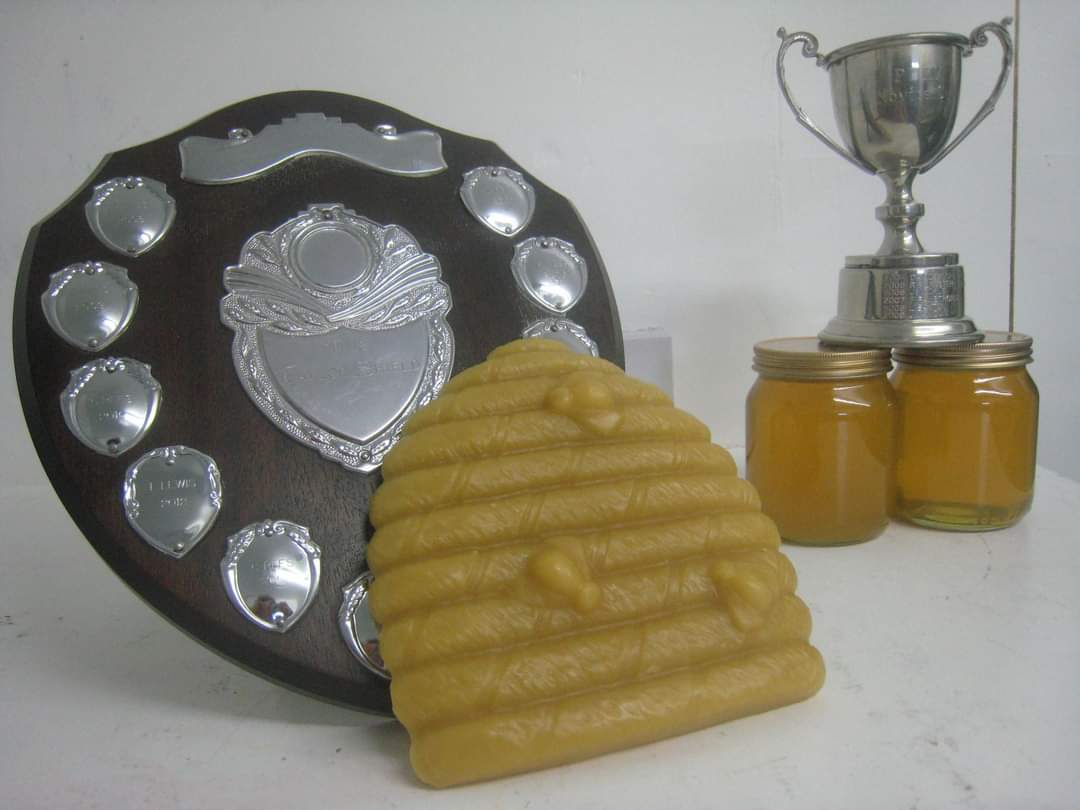
NB. PBKA Honey Show – Date rescheduled to Sunday 16th November 2025 – 10am to 4pm at the Green Barn, Scolton Manor
Just to advise all members that the PBKA Honey Show this has been rescheduled from Sunday 19th October 2025, to Sunday 16th November due to unforeseen circumstances. .
The event, as last year, will be held from 10am until 4pm, at ‘The Green Barn’, just past the old steam train at the bottom of the Scolton Manor site.
Full details to follow!🐝
Any enquiries in the meantime, please come back to me at pbkaapiarymanager@live.co.uk
Very best regards to you all.
Paul Eades
Chair
Pembrokeshire Beekeepers’ Association
Webinar – Through the Eyes of a Regional Inspector with Daniel Baxter – Aug 14, 2025 at 7:30PM
Through the Eyes of a Regional Inspector with Daniel Baxter. Join us for a webinar on Aug 14, 2025 at 7:30 PM BST.
|
Daniel has previously been the SBI in Cardiff & the Vale of Glamorgan, moving to Monmouthshire and is now the Regional Bee Inspector for Wales, alongside being a semi-commercial Beekeeper in South Wales. He feels very privileged to work so heavily within the apiculture industry. Very early on whilst starting out with bees Daniel realised that this was something very much driven by a passion for bees and beekeeping, Daniel chose to develop his skills and knowledge across a number of specialist areas and via working as a Seasonal and Regional Bee Inspector in Wales, Daniel has found it incredibly rewarding to proactively manage bee health and inspire learning within this subject area across Wales.
This webinar will share Daniel’s experiences in the field as an inspector highlighting the successes and maybe some areas where improvements can be made, offering an insight to explore explanations behind colony losses, general bee health and husbandry practices. Daniel welcomes questions from you as beekeepers and invites you to ask questions in advance of the webinar for him to address.
After registering, you will receive a confirmation email containing information about joining the webinar.
PBKA Honey Show – Sunday 19th October 2025 – 10am to 4pm at the Green Barn, Scolton Manor
Just to advise all members that the PBKA plans on running its Honey Show this year, on Sunday 19th October 2025, between 10am and 4pm.
The event, as last year, will be held at ‘The Green Barn’, just past the old steam train at the bottom of the Scolton Manor site.
Full details to follow!🐝
Any enquiries in the meantime, please come back to me at pbkaapiarymanager@live.co.uk
Very best regards to you all.
Paul Eades
Chair
Pembrokeshire Beekeepers’ Association
 Pembrokeshire Beekeepers' Association